Industrial Whitepaper: The Evolution of Sports Mobility Engineering in Seattle
Seattle's Adaptive Sports Landscape & Localized Ecosystem
Seattle, Washington, is a critical hub for adaptive athletic engineering, powered by a convergence of advanced aerospace technologies, regional research universities, and a deeply integrated outdoor sports culture. Home to programs like the University of Washington Adaptive Athletics and regional Paralympic networks, the Pacific Northwest requires sports wheelchairs capable of performing under demanding, highly varied conditions. From indoor court precision to all-terrain trail durability, the demand for custom-fitted, highly rigid sports wheelchairs has scaled exponentially.
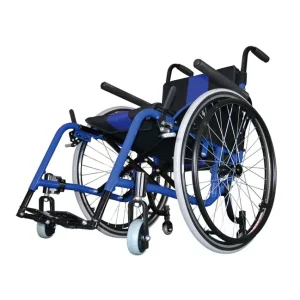
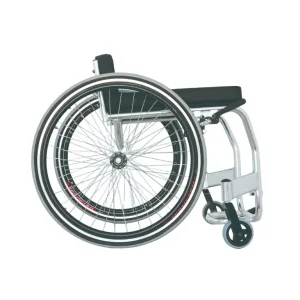
Local sports associations and rehab facilities across Seattle rely on sports wheelchairs that offer instant response, micro-adjustments for body posture, and exceptional weight-to-strength ratios. Regional aerospace-grade manufacturing techniques have influenced sports wheelchair fabrication, pushing designers to abandon heavy standard steel in favor of optimized titanium, magnesium, and custom-tempered aluminum alloys. This local biomechanical expertise drives our specialized, athlete-first production methodology.
Global Commercial Dynamics of Adaptive Mobility Equipment
The global sports wheelchair market is undergoing a significant transition from generalized "off-the-shelf" designs to bespoke, high-performance athletic systems. Valued in the hundreds of millions annually, this sector is fueled by expanding global accessibility mandates, rising investments in competitive parasports, and advanced rehabilitation insurance pathways across North America and Europe. Healthcare institutions, municipal sports divisions, and professional clubs now demand strict certification, certified crash-test standards, and precise modular customization to accommodate athletes of diverse weight classes and biomechanical requirements.
The Chinese Manufacturing Edge: Quality, Scale, and Supply Chain Agility
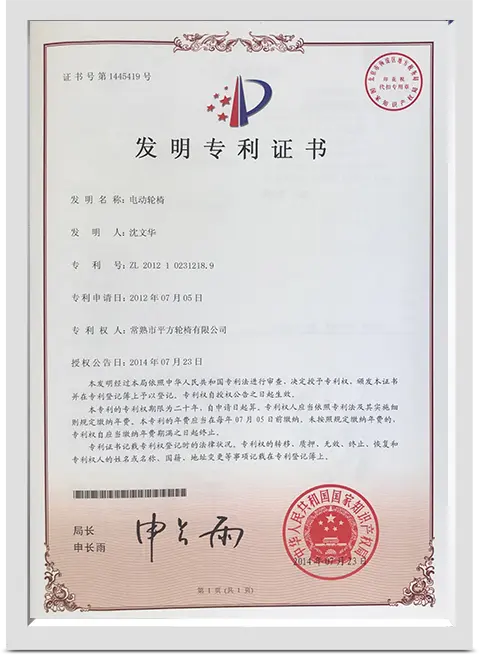
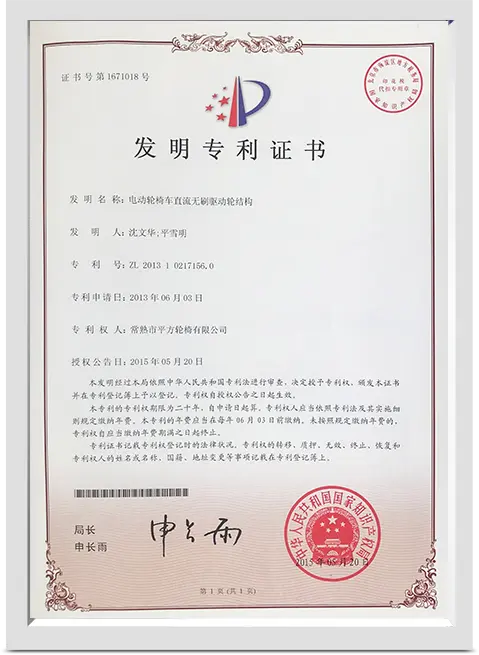
For decades, Western distributors faced high production costs and slow design iteration phases. Located in the world's most robust industrial manufacturing corridor, Chinese facilities have solved these bottlenecks. By combining advanced robotic welding, fully integrated digital sizing pipelines, and localized metallurgy supply chains, we achieve production efficiencies that allow for rapid prototyping and rapid dispatch times. Our factory in China delivers high-precision tolerances of under 0.5mm on wheel alignment, structural joints, and camber setups, ensuring that elite athletes receive premium equipment at a highly competitive scale.
Biomechanical Engineering Requirements & Material Science Integration
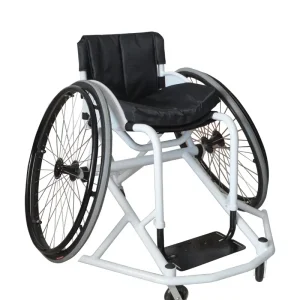
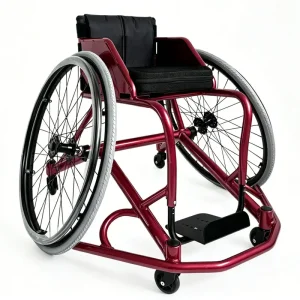
Designing an elite sports wheelchair is a complex exercise in physics. Our R&D team works extensively with center-of-mass shifts, rolling resistance minimization, and torsional rigidity. Camber angles ranging from 15 to 20 degrees are standard for basketball setups to prevent tip-overs and improve acceleration, while track models require specialized straight-line aerodynamic stability and minimal structural flexing. By leveraging automated CNC machining for high-stress connecting blocks, we eliminate micro-weaknesses commonly found in manual welding, giving our products a long operational lifespan under competitive conditions.