Why Choose an Electric Powered Wheelchair?

Time:2026-10-27 Author:Aria
0%

Why Choose an Electric-Powered Wheelchair?

Mobility is more than movement. It affects work, family life, safety, and personal confidence. For many users, an Electric-Powered Wheelchair can reduce physical strain during daily travel. A powered chair can cross smooth corridors, shopping aisles, and outdoor paths with controlled assistance. Its joystick, seating support, battery range, and turning radius matter greatly. Comfort is not a minor feature.

The World Health Organization and UNICEF reported in Global Report on Assistive Technology that more than 2.5 billion people need assistive products worldwide. Nearly one billion people cannot access them. These figures show a serious gap, not simple market demand. Fortune Business Insights estimated the global electric wheelchair market at approximately USD 6.6 billion in 2023. However, market estimates vary by product definition and research method. That uncertainty deserves attention.

Dr. Alarcos Cieza, a WHO assistive-technology expert, said, “Assistive technology is a necessity, not a luxury.” This principle helps explain why powered mobility should be evaluated carefully. A suitable Electric-Powered Wheelchair may support independence, reduce caregiver effort, and improve participation. Yet no model fits everyone. A heavy frame may feel stable but complicate vehicle loading. A larger battery may extend range but increase weight. These trade-offs are easy to overlook.

Real decisions require more than attractive specifications. Users should compare posture support, braking, charging time, service access, and terrain performance. A showroom floor is not a real sidewalk. Evidence, professional assessment, and lived experience should guide the final choice.
Why Choose an Electric Powered Wheelchair?

What Is an Electric Powered Wheelchair? Types, Features, and Core Systems

An electric powered wheelchair uses battery energy to drive motors, replacing manual pushing with controlled movement. It supports people who cannot travel safely or efficiently with a manual chair. The WHO and UNICEF Global Report on Assistive Technology (2022) estimates that more than 2.5 billion people need assistive products worldwide. That demand may exceed 3.5 billion by 2050.

Common designs include rear-wheel, mid-wheel, and front-wheel drive. Mid-wheel models usually turn tightly indoors, while rear-wheel designs can feel steadier outdoors. Folding and travel models prioritize transport, but may sacrifice suspension or battery capacity. Standing and tilt-in-space systems address posture, pressure management, or clinical needs. The choice depends on terrain, body support, home width, and daily transfer ability.

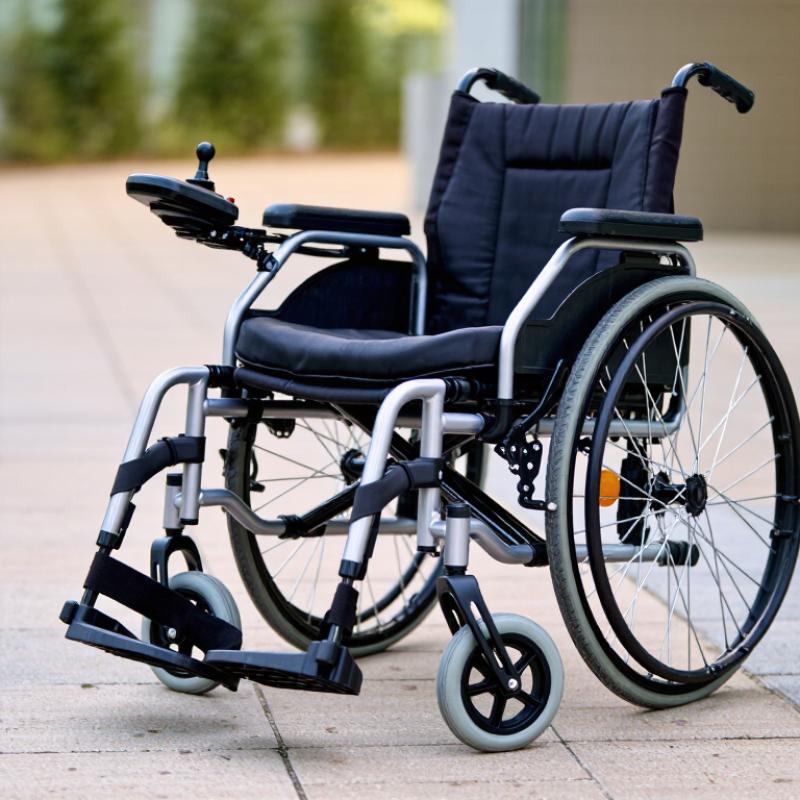
Core systems include the battery pack, motors, controller, joystick, brakes, frame, seating, and anti-tip wheels. Pressure-relieving cushions and adjustable back supports can reduce discomfort during long use. ISO 7176 testing covers stability, braking, durability, and performance under controlled conditions. Real-world results still vary. A published range figure can shrink on hills, cold days, or rough pavement. That detail is easy to miss. Professional assessment should measure turning space, seat height, posture, and charging access before purchase. A powerful motor cannot correct poor seating or unsafe home layout.

Why Choose an Electric Powered Wheelchair?

What Is an Electric Powered Wheelchair? Types, Features, and Core Systems

Typical travel range by electric wheelchair type, shown in miles per full charge. These ranges reflect common published specification bands; actual performance depends on battery capacity, user weight, terrain, temperature, and driving conditions.

Why electric power matters: Electric powered wheelchairs use a rechargeable battery, motors, a controller, and a joystick or alternative input device to provide powered mobility. Drive-wheel layout, seating functions, suspension, and battery capacity influence range, maneuverability, comfort, and outdoor capability.

Why Demand Is Rising: Over 75 Million People Need Wheelchairs Worldwide

Why Choose an Electric Powered Wheelchair?

More than 75 million people worldwide need wheelchairs, according to the World Health Organization. Yet only about 5–15% have access to appropriate wheelchair services. This gap reflects cost, limited healthcare resources, unsuitable environments, and poor product fitting. Demand is also rising. The WHO and UNICEF Global Report on Assistive Technology estimates that 2.5 billion people need at least one assistive product. That number could exceed 3.5 billion by 2050.

Electric powered wheelchairs can reduce the physical effort required for daily movement. A user may travel from a bedroom to a bus stop without repeatedly pushing large rear wheels. Joystick control can support people with weak arms, fatigue, or limited coordination. Adjustable seating may also improve posture and pressure management when prescribed correctly. Small turning spaces matter.

Ageing populations add pressure. The United Nations reports that one in six people worldwide will be over 65 by 2050. Chronic conditions, injuries, and neurological disabilities can make manual propulsion unsafe or exhausting. However, powered mobility is not automatically better. A professional assessment should consider strength, vision, balance, home layout, transport, battery charging, and local repair access. I have seen how a powerful chair can still fail a user on narrow doorways or uneven ground. That detail is easy to miss. Affordability remains unresolved, too. WHO guidance stresses that training, fitting, maintenance, and follow-up are as important as the wheelchair itself.

How Motors, Batteries, and Controls Improve Mobility Under ISO 7176-4

Why Choose an Electric Powered Wheelchair?

An electric powered wheelchair combines motors, batteries, and electronic controls to reduce physical strain. The motor converts battery energy into torque, helping users climb ramps, cross door thresholds, and maintain steady movement. A proportional joystick can deliver gentle indoor turns or faster outdoor travel. That difference matters near tables, elevators, and crowded pavements.

ISO 7176-4 measures theoretical wheelchair distance under controlled conditions, including a defined battery state and test load. It provides a useful comparison, but it does not predict every journey. Real life is messier. Hills, cold weather, tire pressure, user weight, and repeated stops can reduce range. The 2022 WHO and UNICEF Global Report on Assistive Technology estimates that more than 2.5 billion people need assistive products worldwide. It also projects this need will exceed 3.5 billion by 2050. Reliable energy management therefore supports independence, not just convenience.

In practical use, battery capacity should match daily routes, charging access, and terrain. A chair with strong motors may handle slopes well, yet consume energy faster. Softer acceleration can improve comfort and reduce sudden movements, although it may feel slow at first. Controls should be adjustable for hand strength, tremor, and reaction time. A technical specification can look impressive. Personal fitting still decides whether it works. I would also question range claims that omit temperature and payload. That missing detail can change a safe trip into an uncertain one.

Why Choose an Electric Powered Wheelchair? - How Motors, Batteries, and Controls Improve Mobility Under ISO 7176-4

Electric powered wheelchairs use motor-driven propulsion, rechargeable batteries, and electronic controls to reduce physical effort and support repeatable mobility. The figures below are representative engineering ranges for indoor and outdoor power wheelchairs; actual performance depends on user mass, terrain, temperature, tyre pressure, battery age, and configuration.

Representative values are provided for comparison and should not be interpreted as a certified result for a specific wheelchair.
System or Performance Dimension Typical Technical Range or Value How It Improves Mobility Relevance to ISO 7176-4
Drive motor arrangement Two independent electric motors, commonly rated at approximately 200–500 W each Provides powered propulsion, differential steering, and more consistent movement than manual pushing. Motor efficiency and control strategy affect the electrical energy consumed during the test.
Battery voltage Usually 24 V nominal for many powered wheelchair systems Provides the electrical supply required by the motors, controller, lighting, and other powered functions. The available electrical energy is a key input when calculating distance range.
Battery capacity Approximately 20–60 Ah, equivalent to about 480–1,440 Wh at nominal voltage A larger usable energy reserve can support longer trips between charging sessions. Battery capacity contributes directly to the energy available for the standardized range assessment.
Battery chemistry Common designs use sealed lead-acid or lithium-ion battery systems Battery chemistry influences weight, charging time, usable capacity, service life, and voltage stability. The battery must be tested as part of the complete wheelchair system when determining energy consumption.
Electronic control input Proportional joystick control with adjustable speed and direction settings Allows precise starting, stopping, turning, and speed adjustment with limited upper-limb force. Smooth control can reduce unnecessary acceleration and steering losses during travel.
Speed management Typical maximum speed: approximately 6–12 km/h, depending on configuration Selectable speed levels help match the wheelchair to indoor corridors, pavements, and open outdoor areas. The test speed and operating conditions influence measured energy use and calculated range.
Typical theoretical distance range Approximately 15–35 km under controlled conditions for many full-size systems Supports planned community travel and reduces dependence on frequent manual assistance. ISO 7176-4 is used to determine the theoretical distance range from measured energy consumption.
Energy consumption Often approximately 25–70 Wh/km, depending on mass, terrain, speed, and drivetrain efficiency Lower consumption generally provides more distance from the same battery capacity. Energy consumption is measured during the standardized range procedure and used in the range calculation.
Turning capability Turning diameter commonly ranges from approximately 1.0–1.8 m Independent motor control enables tight turns and improved manoeuvrability in confined spaces. Repeated turning, surface friction, and manoeuvring can increase energy consumption during actual use.
Gradient capability Many powered wheelchair configurations are designed for gradients of approximately 6–10 degrees; the user manual governs safe limits Powered torque assists movement on ramps and moderate inclines that may be difficult to negotiate manually. Inclines are not equivalent to a flat standardized range test and can substantially reduce real-world range.
Braking and parking Electromagnetic braking with an automatic parking function is common Helps control deceleration and keeps the wheelchair stationary when the joystick is released. Braking behaviour supports controlled test operation but does not determine range by itself.
Real-world range factors User mass, tyre pressure, outdoor temperature, slopes, stop-start driving, load, and battery condition Explains why everyday distance may be lower or higher than a controlled test result. ISO 7176-4 provides a repeatable comparison method, not a guarantee of range in every environment.
Important note: ISO 7176-4 addresses the determination of theoretical distance range through energy-consumption testing. It does not establish a universal real-world travel distance for every user or terrain condition. Always follow the wheelchair manufacturer's safety instructions and published operating limits.

When Power Chairs Outperform Manual Models: Terrain, Distance, and Access

Why Choose an Electric Powered Wheelchair?

When Power Chairs Outperform Manual Models: Terrain, Distance, and Access

An electric powered wheelchair can make difficult routes more manageable. It is especially useful when terrain, distance, or building access limits a manual chair. Consider a long hospital corridor, a sloped pavement, or a gravel path near a park. Repeated pushing across these surfaces can quickly cause fatigue, shoulder strain, or slower travel. A powered chair provides consistent movement with less upper-body effort. It can also help users preserve energy for work, appointments, and daily tasks.

Terrain matters greatly. Larger drive wheels, suitable ground clearance, and controlled speed can improve stability on uneven outdoor surfaces. However, no chair handles every surface perfectly. Wet grass, loose gravel, and steep slopes still require caution. A qualified mobility specialist should assess the user’s posture, strength, turning control, and usual routes. This practical evaluation is more reliable than choosing equipment from appearance alone. I have seen people focus on speed and overlook transport weight, battery range, or doorway width.

Distance is another deciding factor. Manual models may work well for short indoor trips, especially on smooth floors. Longer journeys can become tiring and reduce independence. A powered chair can support extended movement, but its real range depends on terrain, user weight, temperature, and battery condition. Access should also be measured carefully. Check door thresholds, lift dimensions, bathroom space, and turning areas before purchase. Small details matter. Sometimes, the best choice is not the most powerful chair, but the one that fits the user’s home and routine.

How to Choose Safely: Weight, Range, Seating, and ANSI/RESNA Standards

Why Choose an Electric Powered Wheelchair?

Choosing an electric powered wheelchair starts with safe, realistic measurements. Check the user’s weight, clothing, cushion, bags, and medical equipment together. Staying below the stated capacity matters. Add a safety margin when possible. A small mistake here can affect braking, stability, and motor performance. Measure doorways, ramps, elevators, and vehicle storage space before ordering.

Range claims need careful reading. Real travel distance changes with hills, outdoor surfaces, temperature, user weight, and driving habits. Ask whether the published range comes from standardized testing or ideal conditions. Record your usual routes for one week. Include return travel. Running out of power far from home is not a minor inconvenience. It can become a serious safety problem.

Seating deserves equal attention. The seat width, depth, back angle, cushion, and foot support should match the user’s posture and pressure-care needs. A clinical seating assessment is often worthwhile. ANSI/RESNA standards can provide useful information about safety, durability, stability, and performance testing. However, compliance does not guarantee personal comfort or correct fit. Request clear test information and discuss it with a qualified therapist or mobility specialist. Check brakes, anti-tip devices, controls, and battery charging procedures during a supervised trial. I would not rely on a showroom impression alone. A chair may feel smooth for ten minutes, yet become tiring after several hours.

FAQS

What is an electric powered wheelchair?

It uses battery energy to drive motors. A joystick controls movement instead of manual pushing. It can reduce shoulder strain.

Who may benefit from a powered wheelchair?

It may help people who struggle with distance, slopes, rough paths, or repeated manual pushing. A long hospital corridor can feel much easier.

Which drive system suits different environments?

Mid-wheel designs usually turn tightly indoors. Rear-wheel designs may feel steadier outdoors. Front-wheel models can help with some obstacles.

What should I measure before choosing one?

Measure doorways, ramps, elevators, bathrooms, and vehicle storage areas. Check turning space carefully. Small errors matter.

How reliable are advertised battery ranges?

Published range often comes from controlled conditions. Hills, cold weather, rough pavement, user weight, and battery age can reduce it. Plan the return trip.

What seating features deserve attention?

Seat width, depth, back angle, cushion, and foot support should match the user’s posture. Poor seating can cause discomfort after several hours.

Can a powered wheelchair handle every outdoor surface?

No chair handles everything. Wet grass, loose gravel, and steep slopes require caution. More power does not guarantee safe control.

What safety checks should happen during a trial?

Test braking, anti-tip wheels, joystick control, charging access, and turning. Try the chair longer than ten minutes. A showroom feeling can mislead.

Do safety standards guarantee a good personal fit?

Testing standards can describe stability, braking, durability, and performance. They cannot guarantee comfort or suitability for every home. I would still seek professional assessment.

Conclusion

An Electric-Powered Wheelchair is a mobility device designed to help people travel with less physical effort and greater independence. Unlike a manual wheelchair, it uses motors, rechargeable batteries, and electronic controls to support movement. Common types include compact indoor models, outdoor power chairs, and specialized designs with adjustable seating or advanced support features. Core systems may include drive wheels, controllers, braking mechanisms, batteries, and customizable seating.

Demand for powered mobility continues to grow as more than 75 million people worldwide require wheelchairs. Power chairs can be especially useful for longer distances, uneven terrain, ramps, and environments where pushing a manual chair is difficult. When choosing one, users should consider weight capacity, battery range, turning space, seat comfort, posture support, portability, and maintenance needs. Safety is equally important, so performance and battery range should be evaluated with recognized guidance such as ISO 7176-4, while seating and wheelchair selection should align with relevant ANSI/RESNA standards.

Aria

Aria

Aria is a dedicated marketing professional with a deep passion for innovative strategies and a keen understanding of our company's product offerings. With a wealth of experience in the industry, Aria excels at crafting engaging content that highlights the unique features and benefits of our......