Choosing a Powered Wheelchair supplier is a healthcare and mobility decision, not merely a purchasing exercise. The right partner affects independence, safety, comfort, maintenance, and long-term cost. According to the WHO and UNICEF Global Report on Assistive Technology (2022), more than 2.5 billion people need assistive products today. This figure may exceed 3.5 billion by 2050. Yet access remains uneven, especially in low- and middle-income markets.
The global market is expanding, but published forecasts do not always agree. Reports from Grand View Research, Fortune Business Insights, and MarketsandMarkets show different market sizes and growth rates. That difference deserves attention. Market data depends on product definitions, regional coverage, and sales channels. A strong supplier review must therefore examine more than production volume. It should assess wheelchair durability, battery range, seating adjustment, controller design, spare-parts availability, and technical support.
Details matter.
A reliable supplier should provide clear test documentation and follow recognized requirements, including relevant ISO 7176 wheelchair standards. Buyers should also verify factory experience, quality-control procedures, warranty terms, and local service capability. A low purchase price can become expensive when batteries, motors, or joystick modules are difficult to replace. No supplier ranking is perfect. User needs differ sharply between a compact indoor model and a rugged outdoor wheelchair. This guide compares leading Powered Wheelchair suppliers through a practical global-buyer lens. It considers product reliability, customization, export readiness, service responsiveness, and evidence of real-world performance. Claims still require verification. That is the honest part.
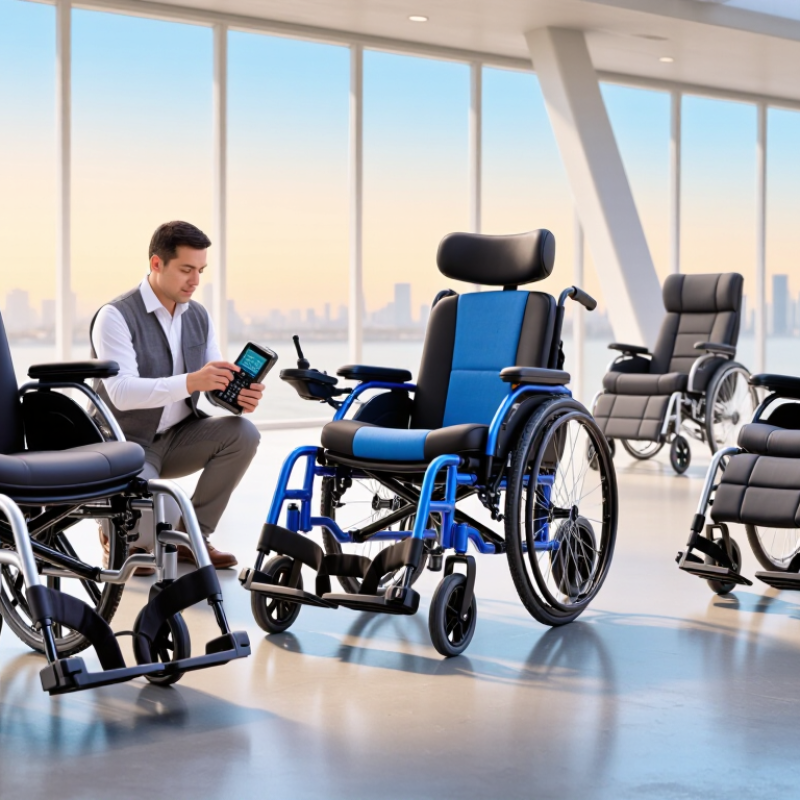
Powered wheelchair suppliers generally fall into four categories: manufacturers, regional distributors, specialist mobility retailers, and contract suppliers. Manufacturers usually provide wider model choices and technical customization. Distributors offer local inventory, delivery, and after-sales coordination. Retailers add fitting support, demonstrations, and user training. Contract suppliers may produce private-label units for institutional buyers.
The market is expanding across home care, rehabilitation centers, elderly care, and accessible transport services. Buyers often compare indoor models, outdoor models, folding designs, and heavy-duty configurations. A compact chair may suit narrow doorways and apartment lifts. An outdoor model needs stronger motors, stable suspension, and dependable battery range. Terrain changes everything. A quoted range can fall sharply on slopes, cold days, or rough pavement.
Reliable sourcing requires more than comparing prices. Check frame dimensions, seat adjustment, controller response, battery documentation, warranty terms, spare-part access, and technician coverage. Ask suppliers for test procedures and maintenance schedules. User trials reveal problems that brochures hide, especially turning radius and transfer height. Product certifications should match the destination market’s requirements. No supplier category is perfect. Small retailers may offer better fitting but limited stock. Large suppliers may provide scale yet slower personal support. I have found that clear service records often matter more than an impressive specification sheet.
The chart presents global assistive-technology demand figures reported by the World Health Organization. Powered wheelchairs are part of the broader assistive-products sector, which includes mobility, communication, vision and hearing devices.
For global buyers, supplier categories commonly include standard indoor power wheelchairs, outdoor and all-terrain models, folding or travel wheelchairs, standing wheelchairs, bariatric models and pediatric power wheelchairs. Buyers should compare regulatory compliance, battery certification, after-sales service, spare-parts availability and export support.
Choosing a powered wheelchair supplier requires more than comparing catalog prices. Evaluate manufacturing experience, product testing, and after-sales support. Ask how long the supplier has served international buyers. Request clear records for battery safety, electrical performance, and quality inspections. Reliable suppliers should explain these details without vague promises.
Examine wheelchair specifications carefully. Check seat width, turning radius, maximum user weight, ground clearance, and battery range. A range of 20 kilometers may change on ramps, rough roads, or cold days. Confirm charger compatibility for your destination. Also review spare-part availability, warranty terms, repair procedures, and response times. A polished website proves little.
Tips: Request a product sample or live video demonstration. Test joystick sensitivity, braking, folding mechanisms, and transfers from different angles. Ask for packaging photos, shipping dimensions, and damage-claim procedures. Check whether manuals are clear enough for caregivers. Small details matter.
Speak with technical staff, not only sales representatives. Their answers can reveal practical knowledge. However, no checklist is perfect. Some suppliers may provide impressive documents but weak service after payment. Contact previous business customers when possible, and compare several written quotations. Leave room for uncertainty, especially when delivery routes, local service capacity, or user needs are unclear.
Global wheelchair buyers should examine usable performance, not polished brochures. The WHO and UNICEF Global Report on Assistive Technology (2022) estimates that more than 2.5 billion people need assistive products. That demand makes supplier verification essential.
A reliable powered wheelchair should offer stable seating, predictable braking, and responsive controls. Range claims need careful testing. Weight, slopes, temperature, and passenger load can reduce real-world distance. Ask for test conditions and battery-cycle records. Small details matter. A joystick should remain usable with limited hand strength. Armrests should support transfers without blocking them. Not every feature deserves a checkbox.
Customization may include seat width, cushion density, footrest length, control position, and suspension settings. Suppliers should document each adjustment. Poor fitting can create pressure points during long travel. The WHO wheelchair provision guidance emphasizes assessment, fitting, training, and follow-up, rather than a simple product sale. A short video consultation helps, but it cannot replace physical assessment in complex cases.
Quality evidence should include ISO 7176 test reports, traceable components, charging instructions, and maintenance procedures. Battery protection, electromagnetic compatibility, and transport safety also require clear documentation. The ISO 7176 series covers wheelchair performance, stability, strength, and testing methods. Ask whether reports represent the exact configuration ordered. Some suppliers provide results from a different model. That is a weak point worth challenging. Service response times, spare-part availability, and warranty exclusions should appear in writing before payment.
International buyers should evaluate powered wheelchair suppliers through compliance, logistics, and support, not price alone. The WHO and UNICEF Global Report on Assistive Technology (2022) estimates that 2.5 billion people need assistive products. That number may reach 3.5 billion by 2050. Supplier capacity matters.
Compliance documents should be specific and current.
Ask for test reports covering ISO 7176 wheelchair safety requirements, electromagnetic compatibility, braking, and battery performance. For lithium batteries, confirm UN 38.3 transport testing and current air-freight documentation. Requirements can differ by destination. A certificate without traceable model numbers is weak evidence. It happens more often than buyers expect.
Shipping plans should include a reinforced crate, moisture protection, spare parts, and clear battery instructions. Request delivery terms, customs support, and a realistic timeline before payment.
After-sales service needs equal attention. Reliable suppliers should offer remote fault diagnosis, service manuals, replacement controllers, and technician training.
Response times should be written into the agreement. The WHO report also notes major gaps in access, affordability, and maintenance, especially in low- and middle-income settings.
A wheelchair can arrive safely and still fail commercially if local repair support is missing. That is the uncomfortable part.
Buyers sometimes focus heavily on factory inspection and overlook post-delivery training. A small pilot shipment, documented acceptance test, and six-month service review can expose those weaknesses early.
Top Powered Wheelchair Suppliers for Global Buyers
Global buyers should compare suppliers by evidence, not polished catalogs or low quoted prices. A reliable supplier shares wheelchair specifications, load limits, battery details, manuals, and inspection records. Ask whether each model fits local terrain, doorway widths, charging conditions, and transport requirements. Compare warranty length, replacement-part access, technician training, and response times across time zones. A useful comparison sheet should record unit cost, packaging, lead time, minimum order quantity, and payment terms.
Request a sample unit or detailed video inspection before placing a larger order. Check frame joints, joystick response, braking, seat adjustment, tire wear, and battery protection. Independent testing can confirm performance, but results should match the exact model and configuration. Suppliers with clear batch records and traceable quality checks are easier to evaluate. A spreadsheet helps, but it can still hide poor communication or inconsistent production.
Tips: Ask for references from comparable markets and verify them carefully. Confirm the supplier’s export experience and packaging standards. Discuss local service training before signing an agreement. Keep every specification in writing, including custom seating, color, charger type, and spare parts. Some buyers focus too heavily on price. That mistake can become expensive when one missing component delays an entire shipment.
Anonymous supplier comparison benchmark for international sourcing and due diligence
| Comparison Dimension | Supplier Profile A Export-focused manufacturer |
Supplier Profile B OEM/ODM production partner |
Supplier Profile C Medical-device specialist |
What Global Buyers Should Verify |
|---|---|---|---|---|
| Typical product focus | Folding and basic mid-wheel or rear-wheel powered wheelchairs | Custom configurations, private-label models and multiple drive layouts | Complex rehabilitation, positioning and clinical-use configurations | Product catalogue, intended use, user weight range and application environment |
| Indicative order quantity flexibility | Usually suitable for small trial orders and mixed stock purchases | Generally suitable for scheduled production and repeat private-label orders | Often optimized for project-based orders and specialist configurations | Written minimum order quantity, sample policy, mixed-model rules and forecast requirements |
| Common battery options | Sealed lead-acid or lithium-ion options, depending on configuration | Multiple battery capacities with packaging and label customization | Battery systems selected according to range, clinical use and transport needs | Battery chemistry, watt-hour rating, charger compatibility, transport documents and replacement availability |
| Typical driving range | Approximately 10–20 km under stated test conditions | Approximately 15–30 km, depending on battery and user load | Approximately 15–35 km for selected long-range configurations | Test method, terrain, ambient temperature, payload, speed and battery capacity; do not compare headline figures alone |
| Maximum user weight | Commonly about 100–150 kg, depending on model | Commonly about 120–180 kg, with configuration-dependent options | May exceed 150 kg on selected heavy-duty configurations | Rated user mass, seat width, center-of-gravity limits and stability test results |
| Portability and transport | Folding or detachable designs; transport weight varies significantly | Configurable frame, detachable batteries and optional transport accessories | Prioritizes seating function and durability; may be heavier | Overall weight, heaviest removable part, folded dimensions and airline/road transport requirements |
| Customization capability | Basic color, upholstery, battery and control-system choices | Private labeling, packaging, firmware settings and accessory customization | Advanced seating, posture support, control access and clinical accessories | Approved specification sheet, engineering-change process, tooling ownership and customization charges |
| Quality-management evidence | May provide factory inspection records and product test reports | Typically provides documented production controls and batch inspection records | More likely to maintain formal medical-device quality procedures | Current ISO 13485 certificate where applicable, scope, issuing body, audit status and traceability records |
| Regulatory documentation | Basic technical file, user manual and conformity documents may be available | Usually supports market-specific labels, manuals and declaration documents | More extensive risk, clinical-use and post-market documentation may be available | Confirm destination-market classification, conformity route, authorized representative and importer obligations |
| Safety and performance testing | Basic electrical, mechanical and battery testing | Model-specific testing with production inspection checkpoints | Broader verification for seating, stability, controls and durability | Relevant test reports, standards edition, model number, laboratory identity and report validity |
| Warranty structure | Often 12 months for the complete chair, with exclusions for wear parts | Often 12–24 months, subject to contract and component terms | May offer separate coverage for frame, electronics, batteries and seating components | Warranty start date, claim evidence, labor coverage, freight responsibility and excluded consumables |
| Spare-parts support | Common replacement parts may be stocked for standard models | Parts lists, service kits and technical support are usually available by contract | More structured support for specialized electronics and seating components | Parts availability period, price list, interchangeability, service manuals and repair training |
| Lead-time planning | Shorter for stocked standard models; longer for special configurations | Requires production scheduling for customized or private-label orders | May require longer planning for clinical seating and special controls | Production lead time, inspection time, shipping schedule, seasonal capacity and delay remedies |
| Recommended buyer fit | Distributors testing demand or purchasing standard models | Importers developing a differentiated product line or private-label range | Healthcare distributors and buyers requiring advanced support and documentation | Match supplier capability with target users, regulatory exposure, service network and total landed cost |
Manufacturers offer broad model choices and technical customization. Regional distributors provide local stock and delivery coordination. Specialist retailers add fitting, demonstrations, and training. Contract suppliers may produce customized units for institutions. No category is perfect.
A compact model may work well in apartments, narrow doorways, and small lifts. Check its turning radius carefully. Measure doors first. Seat width, armrests, and transfer height also matter.
Outdoor models need stronger motors, stable suspension, reliable brakes, and suitable battery range. Rough pavement changes performance. Slopes reduce distance. Cold weather can reduce it further.
Ask for test conditions, battery-cycle records, passenger load limits, and charging guidance. Quoted range is not guaranteed everywhere. Test the chair on realistic slopes and surfaces. Small details matter.
Common options include seat width, cushion density, footrest length, control position, and suspension settings. Each adjustment should appear in writing. Poor fitting can create pressure points during long trips.
Request test reports for the exact ordered configuration. Review component traceability, charging instructions, maintenance procedures, and transport guidance. Confirm braking, stability, strength, and electromagnetic safety evidence. Different-model reports are a weak substitute.
Record unit cost, packaging, lead time, order quantity, payment terms, warranty coverage, and spare-part access. Compare technician support across time zones. Low prices can become expensive when one missing component delays delivery.
Inspect frame joints, joystick response, braking, seat adjustment, tire condition, and battery protection. A video inspection helps, but physical testing reveals more. Brochures hide turning problems. I may overvalue specifications sometimes.
Ask about maintenance schedules, response times, warranty exclusions, replacement parts, and technician training. Request references from similar markets. Keep every detail in writing. Clear service records may matter more than impressive specifications.
Choosing the right Powered Wheelchair supplier is essential for global buyers seeking reliable mobility solutions, consistent quality, and long-term value. Suppliers may specialize in standard models, customized equipment, rehabilitation applications, or large-scale distribution. Buyers should evaluate product range, motor performance, battery capacity, comfort, durability, user safety, and the supplier’s ability to provide practical customization. Clear quality-control procedures, testing documentation, and recognized manufacturing standards can also help reduce purchasing risks.
International cooperation requires careful attention to product compliance, packaging, shipping arrangements, delivery timelines, and import documentation. Equally important are warranty terms, replacement parts, technical guidance, and after-sales service in the buyer’s region. To compare suppliers effectively, global buyers should request detailed specifications, samples or demonstrations, transparent quotations, production schedules, and service commitments. A structured comparison based on performance, total cost, customization capability, communication, and support will help buyers select a dependable partner that can meet both current requirements and future market needs.
